
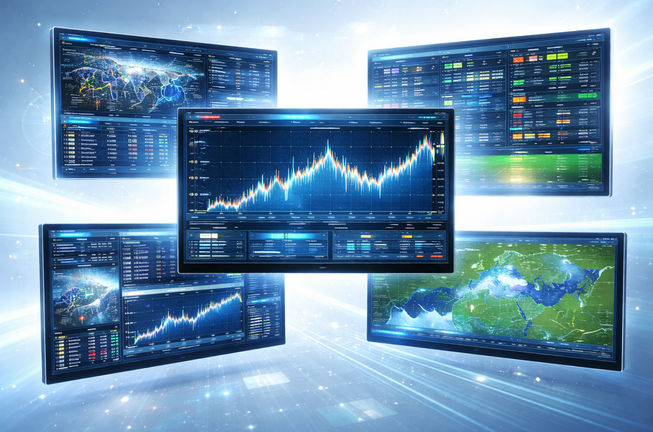
Numbers on many digital dashboards rarely stay fixed for long. A cargo shipment changes position. A weather station records a new measurement. Seconds later the figures on a screen adjust, sometimes before a viewer even notices the shift. Financial interfaces, logistics tracking tools, weather monitoring environments, and sports analytics panels all rely on the same technical principle — turning real-world events into updated numerical data.
Streams of incoming signals pass through processing pipelines where events are captured, interpreted, and translated into fresh indicators. Real-time dashboards appear across many digital services, including analytics environments used in sports data platforms and infrastructures supporting niches like sports betting at 1xBet, where new information must reach the interface within seconds while probability models and analytics tools continue processing fresh data behind the scenes.
How the real-time update pipeline works
Real-time updates rarely happen in a single step. First comes an event — a price shift, a sensor reading, or a change in match statistics. New information then travels through a data feed and enters a processing layer where incoming signals are interpreted. After that, calculation models adjust the relevant indicators, sometimes affecting several related values at once. Only then does the interface display refreshed numbers.
The sequence typically includes several stages:
- detection of a new event;
- transmission through a data feed;
- signal processing inside the platform;
- recalculation of numerical indicators;
- visual display of updated values.
Step 1. How digital systems detect new events
Every real-time update begins with a trigger. Something changes in the physical or digital environment, and that moment generates new information. A stock price shifts. A weather sensor records fresh measurements. Traffic counters register movement on a busy road, while sports analytics tools capture a pass, a goal, or another match statistic. Monitoring networks and analytical platforms constantly watch for such signals. The moment they appear, detection mechanisms register the event automatically — often within milliseconds — and forward the raw data to the next stage of the processing pipeline.
Step 2. How data feeds deliver updates to digital platforms
Once an event is detected, the next step is transmission. The information generated at the source must move quickly toward the digital systems where analysis and probability calculations take place. This transfer occurs through data feeds — continuous digital channels that carry structured updates between systems.
In practice, these feeds link sensors, analytical services, and external data providers with the platforms that process incoming signals.
Different technical mechanisms support this flow. APIs enable systems to exchange structured data, streaming connections maintain a constant flow of updates, and specialized real-time providers distribute verified event information. Financial trading dashboards, weather monitoring services, and sports data platforms depend on these mechanisms to receive steady streams of fresh data.
In financial markets such systems often operate with millisecond latency, while sports data feeds typically transmit updates within roughly 200–500 milliseconds, allowing analytical engines to react almost immediately.
Step 3. How event-processing engines interpret incoming signals
When fresh data reaches the platform, the first task is interpretation. The system must determine what kind of event has occurred and whether the update changes existing indicators. Event-processing engines perform this evaluation by classifying the signal, estimating its influence, and deciding if recalculation procedures should begin.
Modern platforms handle this stage through event-driven architecture, stream-processing pipelines, and distributed computing systems capable of evaluating many updates simultaneously. Similar logic appears across multiple industries: financial systems react to stock price movements, weather monitoring services register new atmospheric readings, and sports analytics platforms capture individual actions inside a game. Through this stage raw incoming signals become structured events that digital systems can interpret and process further.
Step 4. How probability and calculation engines recompute numerical models
Once incoming signals have been interpreted, analytical systems move to recalculation. At this stage the platform must update the numerical models that describe the current state of the environment. Statistical models evaluate the new information, predictive algorithms estimate potential outcomes, and probability engines adjust previously calculated indicators.
These computational layers operate continuously in many digital infrastructures. Weather forecasting systems recompute atmospheric projections as new measurements arrive. Financial risk modelling platforms reassess exposure when market variables change. Traffic prediction systems update congestion estimates as road data shifts. Through this recalculation cycle, raw signals are converted into updated numerical models that reflect the most recent state of the system.
Step 5. How dashboards display updated numbers instantly
Once probability models finish recalculating indicators, the pipeline reaches its final stage — displaying the updated values. Modern platforms present these changes through real-time dashboards.
Several interface technologies support this process:
- WebSockets keep a continuous connection between the server and the interface.
- Dynamic interface rendering updates only the visual elements that changed.
- Real-time dashboards organize incoming values into structured panels.
Such mechanisms power many operational interfaces, including financial trading dashboards, sports analytics panels, and logistics monitoring systems where updated figures must appear on screen without noticeable delay.
Top technical elements behind real-time data platforms
Modern real-time data platforms combine several technologies that allow digital systems to process information and update indicators almost instantly. The most important technical components typically include:
- low-latency data feeds that deliver incoming signals quickly;
- event-driven processing pipelines that interpret system events;
- distributed computing infrastructure that processes large data flows;
- statistical prediction models that recalculate numerical indicators;
- real-time interface dashboards that display updated values for users.
Trusted sources on real-time data technologies
Statistical overviews of the digital data industry are regularly published by Statista, where analysts examine trends in real-time data infrastructure and global information flows. These reports help illustrate how modern platforms process large volumes of streaming information.
Engineering research on real-time computing systems is widely presented by IEEE (Institute of Electrical and Electronics Engineers). Many technical publications from this organization explore the architecture of distributed systems, event-driven processing, and real-time data technologies used across digital platforms.